
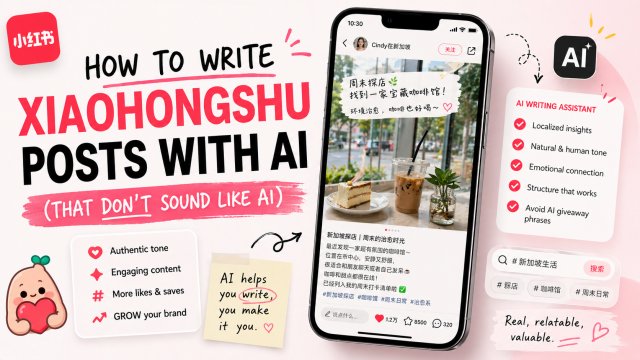
In 2026, Xiaohongshu — or Little Red Book — has become the single most important social platform for brands targeting Chinese-speaking consumers in Singapore and across Southeast Asia. What started as a cross-border shopping guide for Chinese tourists has evolved into a full-fledged lifestyle ecosystem with over 300 million monthly active users globally, and a rapidly growing Singapore user base that now exceeds 2 million.
For Singapore brands, the opportunity is massive. Singapore is consistently one of the top 5 most-searched locations on Xiaohongshu by Chinese users planning travel, study, or business trips. Local influencers like @yvonnexu (420K followers, Singaporean lifestyle and beauty creator) regularly drive thousands of visitors to SG brands and businesses with a single post. A well-timed Xiaohongshu post about a new cafe in Tiong Bahru or a hidden batik boutique in Joo Chiat can generate more foot traffic than a month of Instagram ads — and at a fraction of the cost.
What makes Xiaohongshu unique is its dual identity. It's part social network, part search engine. Users actively search for reviews, recommendations, and tutorials the same way they use Google. A Singapore brand selling “chili crab sauce kit” that ranks for “新加坡小吃推荐” (Singapore food recommendations) can get organic traffic for years after publishing a single post. This SEO-like longevity sets Xiaohongshu apart from the ephemeral feeds of TikTok and Instagram.
In 2026, three trends are driving Xiaohongshu adoption by Singapore brands:
- Localised content demand: Chinese Gen Z users increasingly want authentic local perspectives, not generic travel guides. They want to know which hawker stall at Maxwell Food Centre has the best Hainanese chicken rice, which NUS exchange programme is worth it, and where to find sustainable fashion in Kampong Glam.
- AI-powered content creation: Tools like Doubao (by ByteDance), Kimi (Moonshot AI), and ChatGPT are being used by creators to draft, refine, and translate content. But the brands that win are the ones using AI as a starting point, not a finishing line.
- Commerce integration: Xiaohongshu's in-app shopping features have matured significantly in 2026. Users can now discover a product and purchase it without leaving the app. Singapore brands that set up their Xiaohongshu store and create compelling content around it are seeing conversion rates 2-3x higher than traditional e-commerce channels.
The bottom line: if your Singapore brand targets Chinese-speaking consumers — whether they're locals, expats, or tourists — Xiaohongshu is not optional in 2026. And AI is the tool that makes content creation at scale possible. But here's the catch: AI-generated content that sounds like AI will be rejected by Xiaohongshu's algorithm and audience. Let's talk about how to avoid that.